
 Get Directions
This hike explores the 352-acre Hudson Highlands Gateway Park, where the high points were used for signaling during the Revolutionary War. Subsequently, the land was logged to provide fuel for the local iron industry, and it later served as a dairy farm and a quarry. In recent years, this parcel was slated for development, but it was acquired as parkland in 2000 by Scenic Hudson, the Town of...
Hike Description:
This hike explores the 352-acre Hudson Highlands Gateway Park, where the high points were used for signaling during the Revolutionary War. Subsequently, the land was logged to provide fuel for the local iron industry, and it later served as a dairy farm and a quarry. In recent years, this parcel was slated for development, but it was acquired as parkland in 2000 by Scenic Hudson, the Town of Cortlandt and the County of Westchester. In 2016, title to the parcel was transferred to the Town of Cortlandt, subject to a conservation easement held by Scenic Hudson.
From the parking area, cross the road, and proceed through a narrow opening in the guardrail. The blue-blazed Upland Trail begins at a kiosk, which displays a trail map and information on the history of the land that now forms the park. Follow the blue trail across wooden puncheons and uphill through a former gravel pit – now covered with dense vegetation. Soon, you’ll reach a fork, where the loop of the blue trail begins. Turn left to follow the loop in the clockwise direction.
After climbing some more, you'll reach a junction. Here, the red-blazed Annsville Creek Trail continues ahead, but you should turn right and follow both blue and red blazes. After climbing stone steps, you'll reach a junction (marked by post 1) with the yellow-blazed Hudson Overlook Trail, which begins on the right. Turn right onto the yellow trail, which continues to climb.
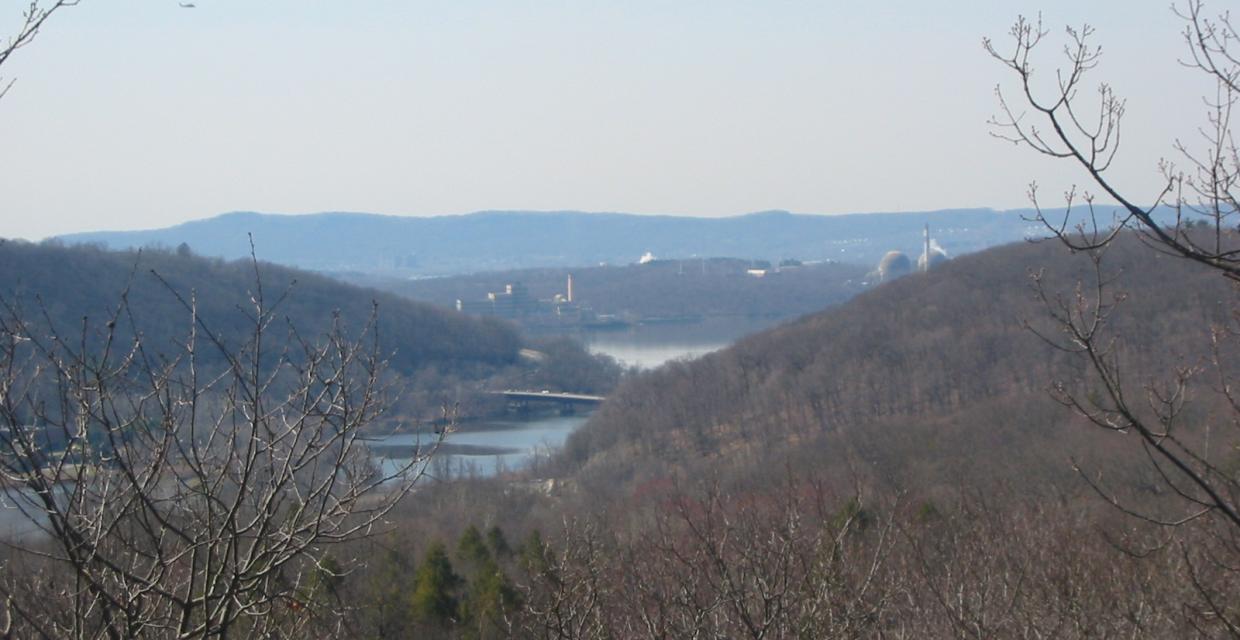
At the top of the rise, you'll reach a T-intersection. Here, the yellow trail turns left, but you should turn right and follow a trail marked with blue paint blazes 200 feet to a viewpoint from a rock outcrop. Ahead, you can see the road bridge over Annsville Creek and the Hudson River beyond, with the Indian Point nuclear power plant visible along the river.
When you’ve taken in the view, retrace your steps to the yellow trail and continue straight ahead. In a short distance, you'll reach a junction with the blue trail (marked by post 2). Turn right, now following both yellow and blue blazes, and descend rather steeply. At post 5, the blue trail leaves to the right, but you should continue ahead on the yellow trail, which crosses a wet area on puncheons and heads north, weaving around rock outcrops. You may notice, through the trees on the right, a large landfill across Sprout Brook Road.
In a third of a mile, you'll reach another T-intersection (marked by post 4). The white-blazed Vernal Pool Trail begins on the left, but you should turn right to continue on the yellow trail, which descends to cross a stream on rocks and then begins a steady climb. At the crest of the rise, you'll reach (to the left of the trail) a rock outcrop studded with pitch pines, with a west-facing view. Although partially obstructed by vegetation, the view from this overlook is slightly broader, and you can see the Metro-North Railroad bridge over Annsville Creek (beyond the road bridge).
After taking in the view, continue along the yellow trail, which traverses moss-covered rocks and passes a glacial erratic on the right. It descends through hemlocks, passes a cliff on the left, and climbs gradually to end at a junction with the white trail. Turn right onto the white trail, which passes rock outcrops on the right, then turns left and descends through mountain laurel to a hollow. Next, it climbs to a rock outcrop with a northwest-facing view (when there are no leaves on the trees).
The white trail now bears left and begins a steady descent, passing a vernal pool (for which the trail is named) on the left. Soon, the trail bears right, and the descent steepens. At the base of the descent, the trail crosses two streams on rocks, with cascades to the right of the second stream crossing. After briefly paralleling the second stream, the trail crosses a wide stone wall and immediately turns left, heading uphill. It turns left onto a woods road and continues to head uphill until it reaches a junction with the blue trail.
Turn right and continue along the blue trail, which now heads downhill on an eroded woods road (on old maps, this road is called “Old Revolutionary Road”). At one point, the road becomes very gullied, and the trail is routed to the right to bypass this section of the road. As the trail bears left and crosses the road, the busy Route 9 can be seen and heard directly to the right.
The trail now parallels the road on the opposite side, passing some interesting rock outcrops. It then bears right and descends to the road, where it turns left and once again begins to run along the road. Just ahead, the red trail joins from the right. Continue ahead, now following both blue and red blazes. Soon, you'll reach a junction marked by post 1, where the yellow trail begins on the left. Continue ahead, following blue and red blazes. You now begin to retrace the route you followed at the start of the hike.
At the next junction, the red trail turns right, but you should turn left and descend on the blue trail. When you reach the start of the loop of the blue trail, turn right and descend rather steeply. After crossing a wet area on puncheons, you'll arrive at the kiosk on the west side of Sprout Brook Road. Cross the road to reach the parking area where the hike began.
Publication: Submitted by Daniel Chazin on 04/27/2007 updated/verified on 01/25/2021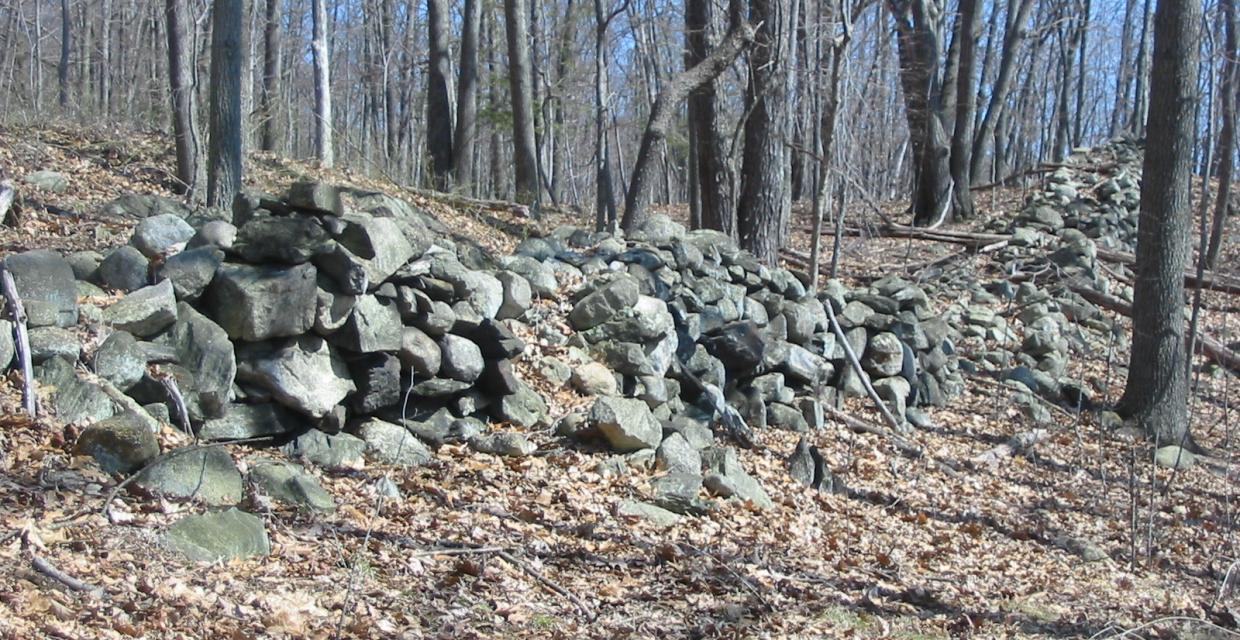


This hike loops through the park, climbing to two viewpoints and crossing several streams with cascades.
41.313665, -73.924044
Westchester Co., NY
4 mi
3 hrs

Buy Book: Walkable Westchester
Buy Map: *New* East Hudson Trails Map
Avenza App Map: East Hudson 101
Hike Checklist:
Whether you are going for a day hike or backpacking overnight, it is good practice to carry what we call The Hiking Essentials. These essentials will help you enjoy your outing more and will provide basic safety gear if needed. There may also be more essentials, depending on the season and your needs.
The Essentials
Hiking Shoes or Boots
Water - Two quarts per person is recommended in every season. Keep in mind that fluid loss is heightened in winter as well as summer. Don't put yourself in the position of having to end your hike early because you have run out of water.
Map - Know where you are and where you are going. Many of our hiking areas feature interconnecting network of trails. Use a waterproof/tear-resistant Tyvek Trail Conference map if available or enclose your map in a Ziplock plastic bag. If you have a mobile device, download Avenza’s free PDF Maps app and grab some GPS-enhanced Trail Conference maps (a backup Tyvek or paper version of the map is good to have just in case your batteries die or you don't have service). Check out some map-reading basics here.
Food - Snacks/lunch will keep you going as you burn energy walking or climbing. Nuts, seeds, and chocolate are favorites on the trail.
Sunscreen and insect repellent
Rain Gear and Extra Clothing - Rain happens. So does cold. Be prepared for changing weather. Avoid cotton--it traps water against your skin and is slow to dry. If you are wearing wet cotton and must return to your starting point, you risk getting chills that may lead to a dangerous hypothermia. Choose synthetic shirts, sweaters and/or vests and dress in layers for easy on and off.
Compass - A simple compass is all you need to orient you and your map to magnetic north.
Light - A flashlight or small, lightweight headlamp will be welcome gear if you find yourself still on the trail when darkness falls. Check the batteries before you start out and have extras in your pack.
First Aid Kit - Keep it simple, compact, and weatherproof. Know how to use the basic components.
Firestarter and Matches - In an emergency, you may need to keep yourself or someone else warm until help arrives. A firestarter (this could be as simple as leftover birthday candles that are kept inside a waterproof container) and matches (again, make sure to keep them in a waterproof container) could save a life.
Knife or Multi-tool - You may need to cut a piece of moleskin to put over a blister, repair a piece of broken equipment, or solve some other unexpected problem.
Emergency Numbers - Know the emergency numbers for the area you're going to and realize that in many locations--especially mountainous ones, your phone will not get reception.
Common Sense - Pay attention to your environment, your energy, and the condition of your companions. Has the weather turned rainy? Is daylight fading? Did you drink all your water? Did your companion fail to bring rain gear? Are you getting tired? Keep in mind that until you turn around you are (typically) only half-way to completing your hike--you must still get back to where you started from! (Exceptions are loop hikes.)
Check the weather forecast before you head out. Know the rules and regulations of the area.
The Leave No Trace Seven Principles
Plan Ahead and Prepare
- Know the regulations and special concerns for the area you'll visit.
- Prepare for extreme weather, hazards, and emergencies.
- Schedule your trip to avoid times of high use.
- Visit in small groups when possible. Consider splitting larger groups into smaller groups.
- Repackage food to minimize waste.
- Use a map and compass to eliminate the use of marking paint, rock cairns or flagging.
Travel and Camp on Durable Surfaces
- Durable surfaces include established trails and campsites, rock, gravel, dry grasses or snow.
- Protect riparian areas by camping at least 200 feet from lakes and streams.
- Good campsites are found, not made. Altering a site is not necessary.
- In popular areas:
- Concentrate use on existing trails and campsites.
- Walk single file in the middle of the trail, even when wet or muddy.
- Keep campsites small. Focus activity in areas where vegetation is absent.
- In pristine areas:
- Disperse use to prevent the creation of campsites and trails.
- Avoid places where impacts are just beginning.
- Pack it in, pack it out. Inspect your campsite and rest areas for trash or spilled foods. Pack out all trash, leftover food and litter.
- Deposit solid human waste in catholes dug 6 to 8 inches deep, at least 200 feet from water, camp and trails. Cover and disguise the cathole when finished.
- Pack out toilet paper and hygiene products.
- To wash yourself or your dishes, carry water 200 feet away from streams or lakes and use small amounts of biodegradable soap. Scatter strained dishwater.
- Preserve the past: examine, but do not touch cultural or historic structures and artifacts.
- Leave rocks, plants and other natural objects as you find them.
- Avoid introducing or transporting non-native species.
- Do not build structures, furniture, or dig trenches.
- Campfires can cause lasting impacts to the backcountry. Use a lightweight stove for cooking and enjoy a candle lantern for light.
- Where fires are permitted, use established fire rings, fire pans, or mound fires.
- Keep fires small. Only use sticks from the ground that can be broken by hand.
- Burn all wood and coals to ash, put out campfires completely, then scatter cool ashes.
- Observe wildlife from a distance. Do not follow or approach them.
- Never feed animals. Feeding wildlife damages their health, alters natural behaviors, and exposes them to predators and other dangers.
- Protect wildlife and your food by storing rations and trash securely.
- Control pets at all times, or leave them at home.
- Avoid wildlife during sensitive times: mating, nesting, raising young, or winter.
Be Considerate of Other Visitors
- Respect other visitors and protect the quality of their experience.
- Be courteous. Yield to other users on the trail.
- Step to the downhill side of the trail when encountering pack stock.
- Take breaks and camp away from trails and other visitors.
- Let nature's sounds prevail. Avoid loud voices and noises.
The Trail Conference is a 2015 Leave No Trace partner.
(c) Leave No Trace Center for Outdoor Ethics: www.LNT.org.
 Directions to Trailhead
 Public Transportation
Directions to Trailhead :
From the east end of the Bear Mountain Bridge, proceed east on US 6/US 202 for about 3.5 miles to a traffic circle. Take US 9 North, continue for 0.6 mile to the next traffic light, and turn right onto Roa Hook Road. At the next intersection, turn right onto Albany Post Road, then immediately turn left onto Sprout Brook Road. Continue for 0.6 mile, passing ballfields on the right, and park in a large dirt parking area on the right, at a sign for Hudson Highlands Gateway Park.
TRAIN TRANSPORT :
Not availableBUS TRANSPORT :
Not availableShare Your Experience
SUPPORT
 Support the trails with a donation!
Trail Conference volunteers maintain trails in this hike.
Trip Reports
rate experience August 09, 2016
Recent experience
<p>I just hiked the most of this trail this past weekend (August 6th). Did not do the red trail loop as I was too sweaty and buggy by that time. </p>
<p> </p>
<p>It's pretty dry right now so none of the pools, streams or cascades were there. Maybe in the spring or fall? Also with all the leaves on the trees most of the overlooks don't show you more than a narrow view. This is probably a great fall hike.</p>
<p><br>Trails were fairly well maintained but the white blazed Vernal Pool trail needs some work. A few trees with markers are down and rotting. At one point we lost the trail altogether, more or less at this part in the hike</p>
<p><strong><span style="color: #111111; font-family: Verdana, Arial, Helvetica, sans-serif; font-size: 12.16px; line-height: 14.592px; background-color: #edefd9;">After briefly paralleling the stream, the trail crosses a wide stone wall and immediately turns left, heading uphill.</span></strong></p>
<p>We ended up heading straight across the area where the streams were and couldn't find the markers to the left. So we walked uphill until we hit a fireroad at the top of the hill, turned left and eventually found the white trail again. </p>
<p> </p>
<p>There are also a few stretches on this trail and on the blue trail in between the white and red trails where the overgrowth has almost taken over the path. Somene needs to come in with a matchette and clear out the pricker vines that are choking the path. </p>
<p><br>For this time of year bring PLENTY of bug spray.</p>
<p> </p>
<p>FINALLY - the map link available from this pages does not show the white trail at all. It also links you to the East Hudson map pack that you can buy as a digital copy for use with PDFMaps or paper version. I bought the PDF version and unfortunately this part of the park is NOT IN THE MAPS!!!. Very annoying. </p>
January 19, 2014
Time and distance
<p>The hike claims to be 3 hours and 4 miles. We hiked it today exactly as described and it took 2:40 and the GPS claimed it was 5 miles. Certainly your time may vary based on your pace, but wanted to update the distance estimate.</p>
September 28, 2013
Grateful for update
<p>Was gonna ask re. the current condition of these trails but saw that someone already commented - thanks!</p>